Mary’s Birth (1963): Creation Amid Monstrosity in Zeno’s Surreal Lens Remastered (2025)
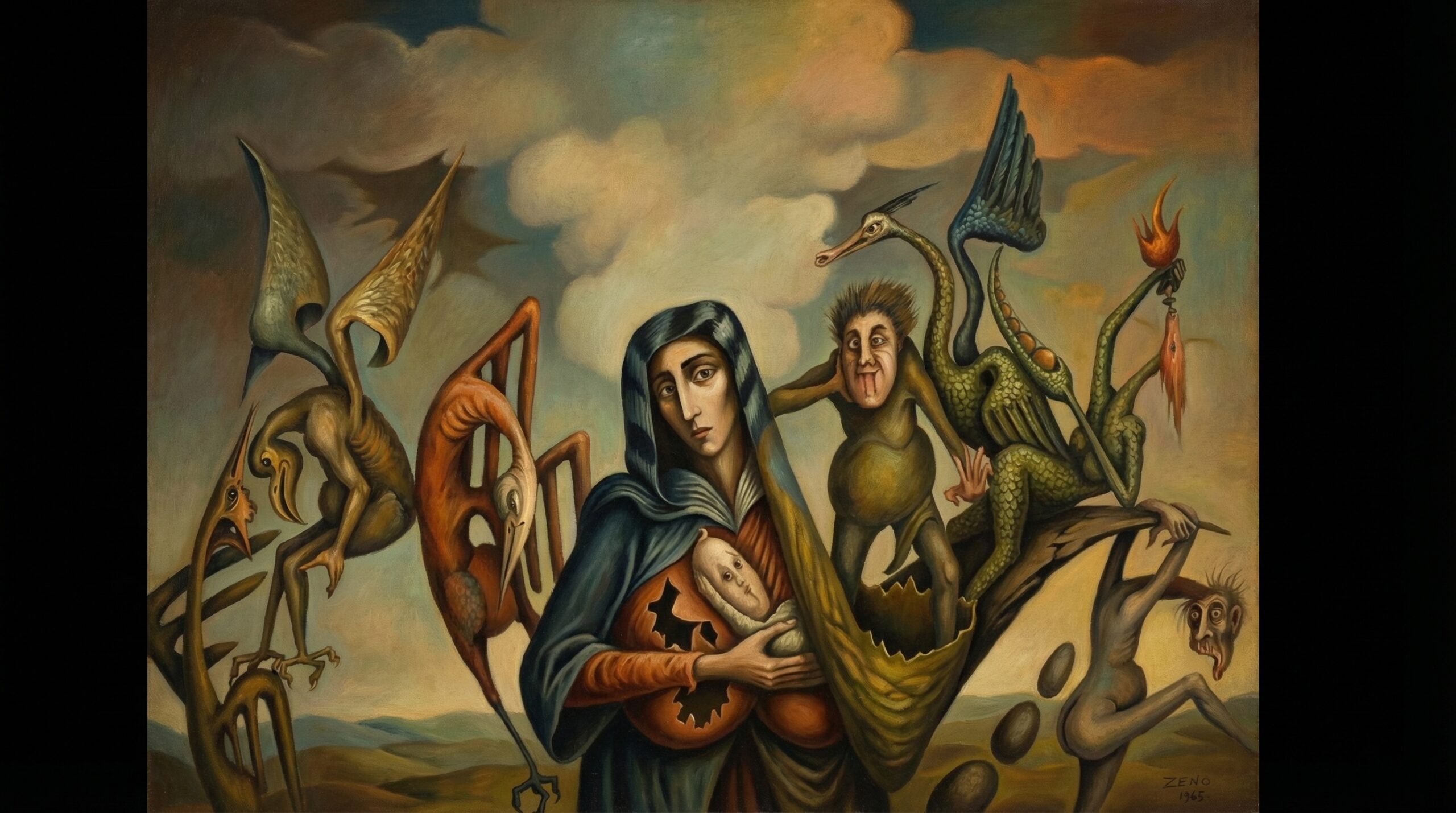
In the fractured dawn of a barren landscape, a veiled woman cradles a cracked vessel from which a pale infant emerges, surrounded by a menagerie of hybrid grotesques—avian claws, reptilian scales, flaming beaks perching like unholy sentinels. This is “Mary’s Birth,” a surreal invocation from the fire-salvaged sketches of Chicago muralist Albert Zeno (Albany Zeno Sr., 1929–1999), where motherhood is no gentle nativity but a confrontation with the deformed offspring of a poisoned world.
The Visual Language: Distortion as Defiance
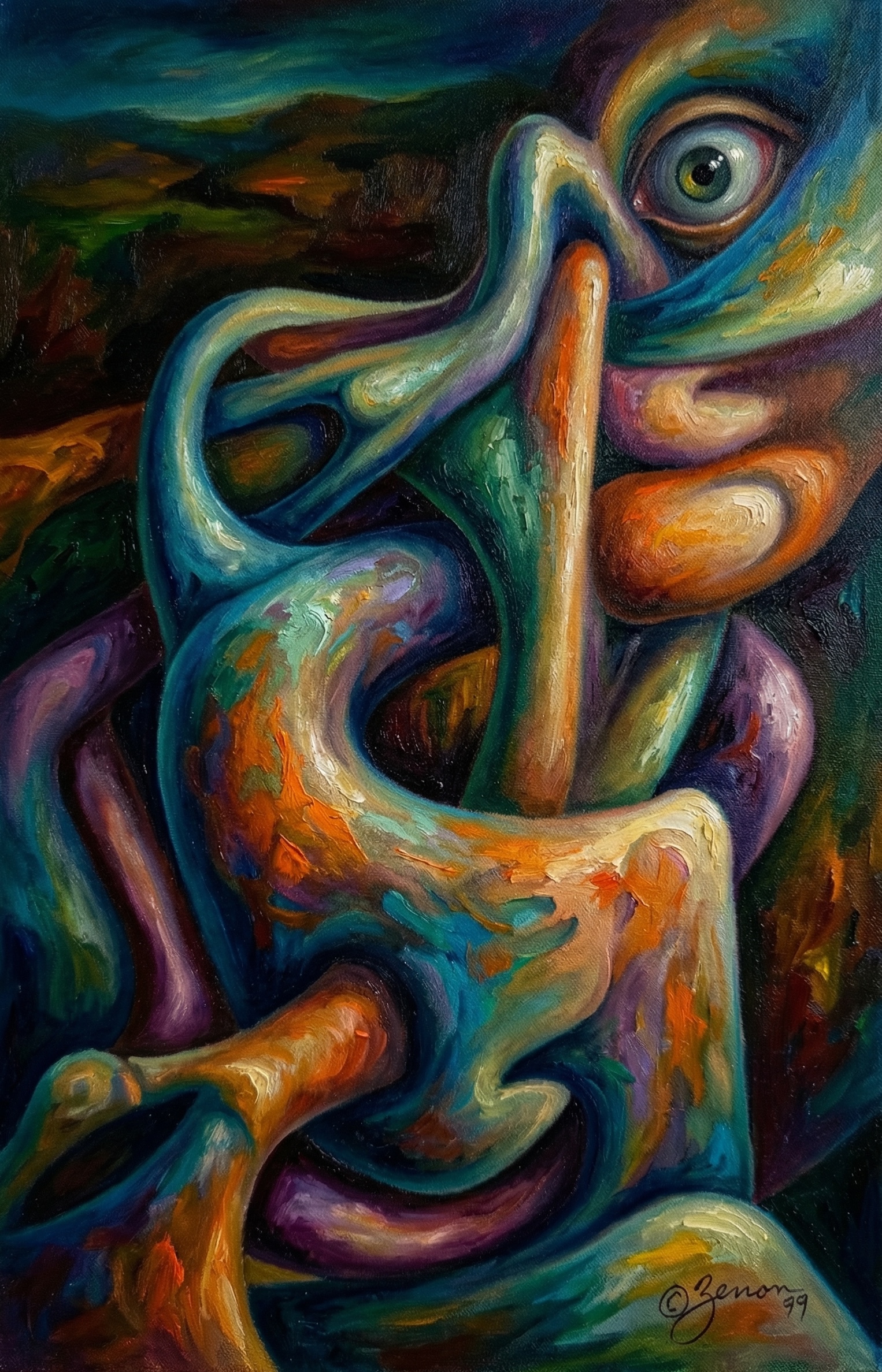
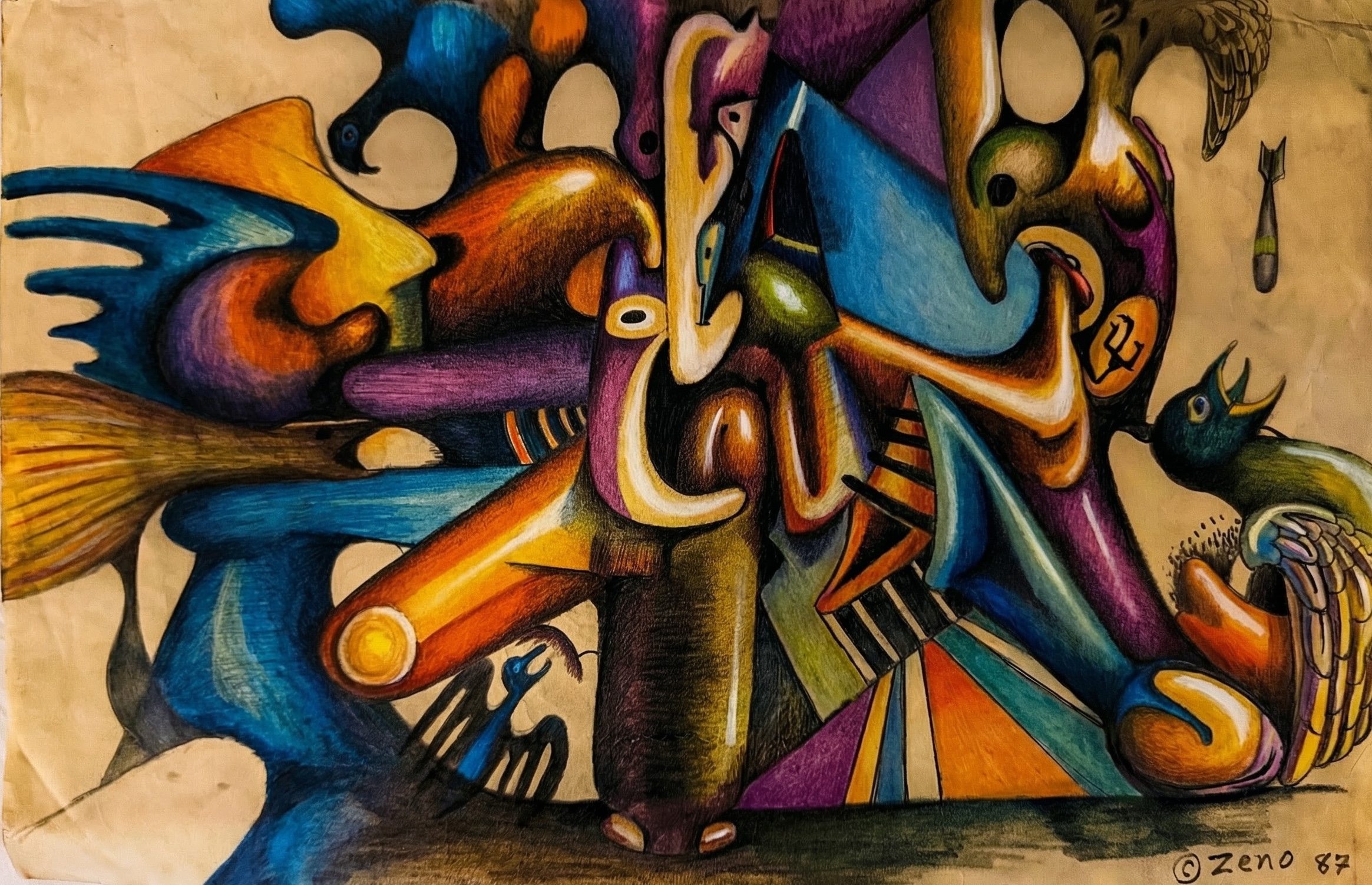
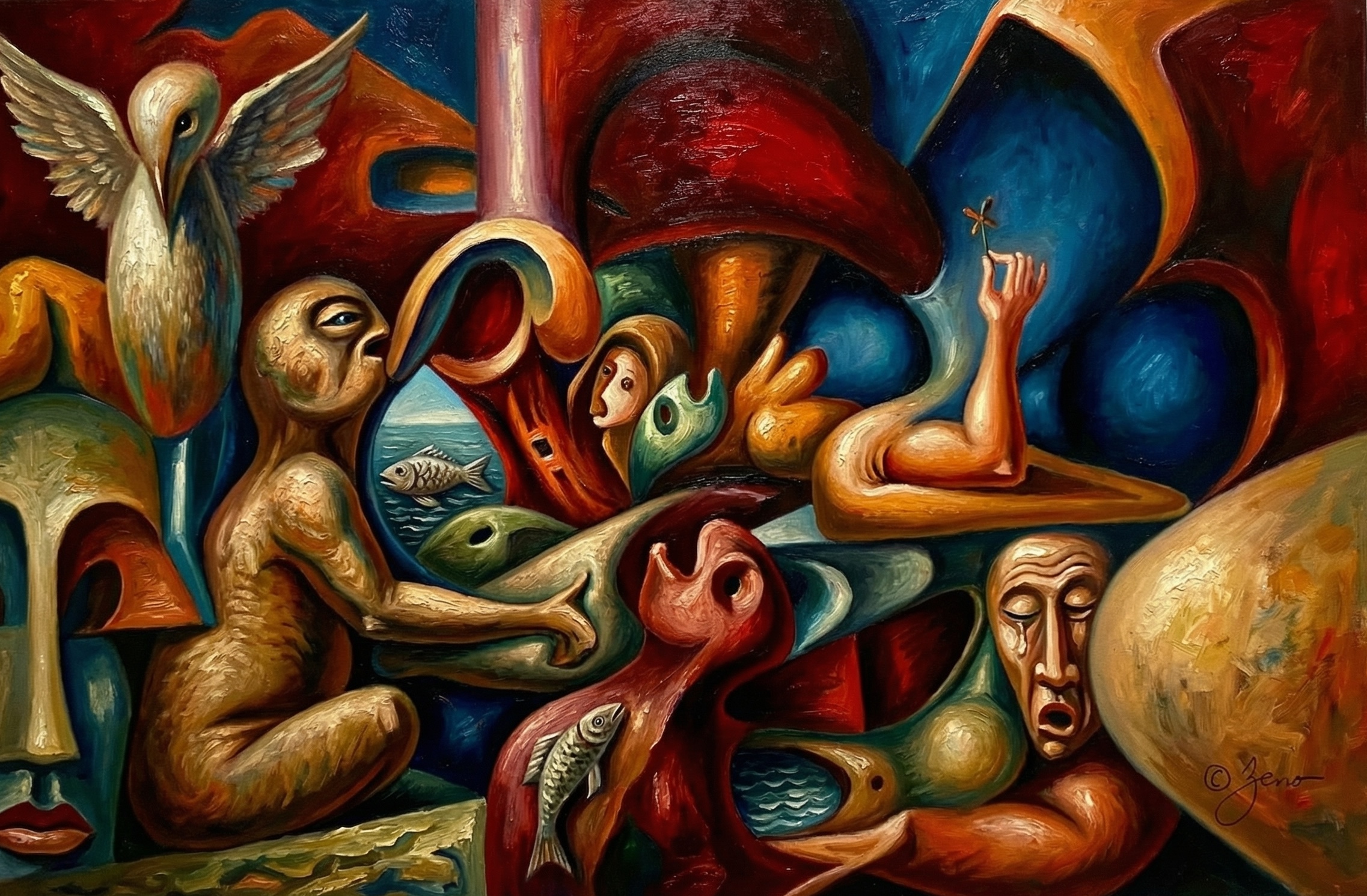
Zeno’s composition is a masterclass in tension: the mother’s downward gaze holds quiet resolve, her blue cloak a shroud of protection amid the chaos. The creatures swarm—part bird, part beast, part human—twisting in agonized forms that echo the artist’s unflinching gaze on mutation. Colors bleed from bruised purples to fiery oranges, the horizon a storm-lit warning. The negative space is heavy, unspoken loss hanging in the air like mercury vapor.
This is the “aha” revelation: birth as both miracle and monstrosity, the sacred vessel cracked by the profane forces of exploitation. Zeno painted not to comfort, but to confront—inviting the viewer to see the parallel warping of nature and humanity.
Historical Context: From Hyde Park Mural to Personal Prophecy
Created in the 1960s–1970s amid Chicago’s urban upheaval, “Mary’s Birth” resonates with Zeno’s contributions to the Hyde Park Mural Movement. Under aliases like Caryl Yasko and Moso, he collaborated on works like the 1972 “Alewives and Mercury Fish” mural at 55th Street and Lake Park Avenue—a public cry against Lake Michigan’s alewife die-offs and mercury poisoning from industrial waste. Here, the mother’s fractured heart mirrors that environmental collapse: the poisoned womb birthing twisted life, a metaphor for racial displacement, nuclear anxiety, and the starving artist’s own struggle.
Zeno’s life was one of persistence through poverty—painting under multiple identities, his work fragmented and partially erased. This piece, salvaged from the estate’s ashes, stands as his testament: creation endures, even when deformed by the world’s grip.